Piles, medically known as hemorrhoids, are swollen or enlarged vascular tissues in and around the anus and lower rectum. Although piles are common, many patients are unsure whether their symptoms are caused by internal piles or external piles. Understanding the difference can help you recognize symptoms and know when a medical evaluation may be appropriate.
Internal and external piles differ mainly in their location, symptoms, pain pattern, and clinical presentation. Some people may also develop a combination of both types.
If you are experiencing rectal bleeding, swelling, discomfort, or a lump around the anus, getting the correct diagnosis is important because not every anal symptom is caused by piles.
What Are Internal Piles?
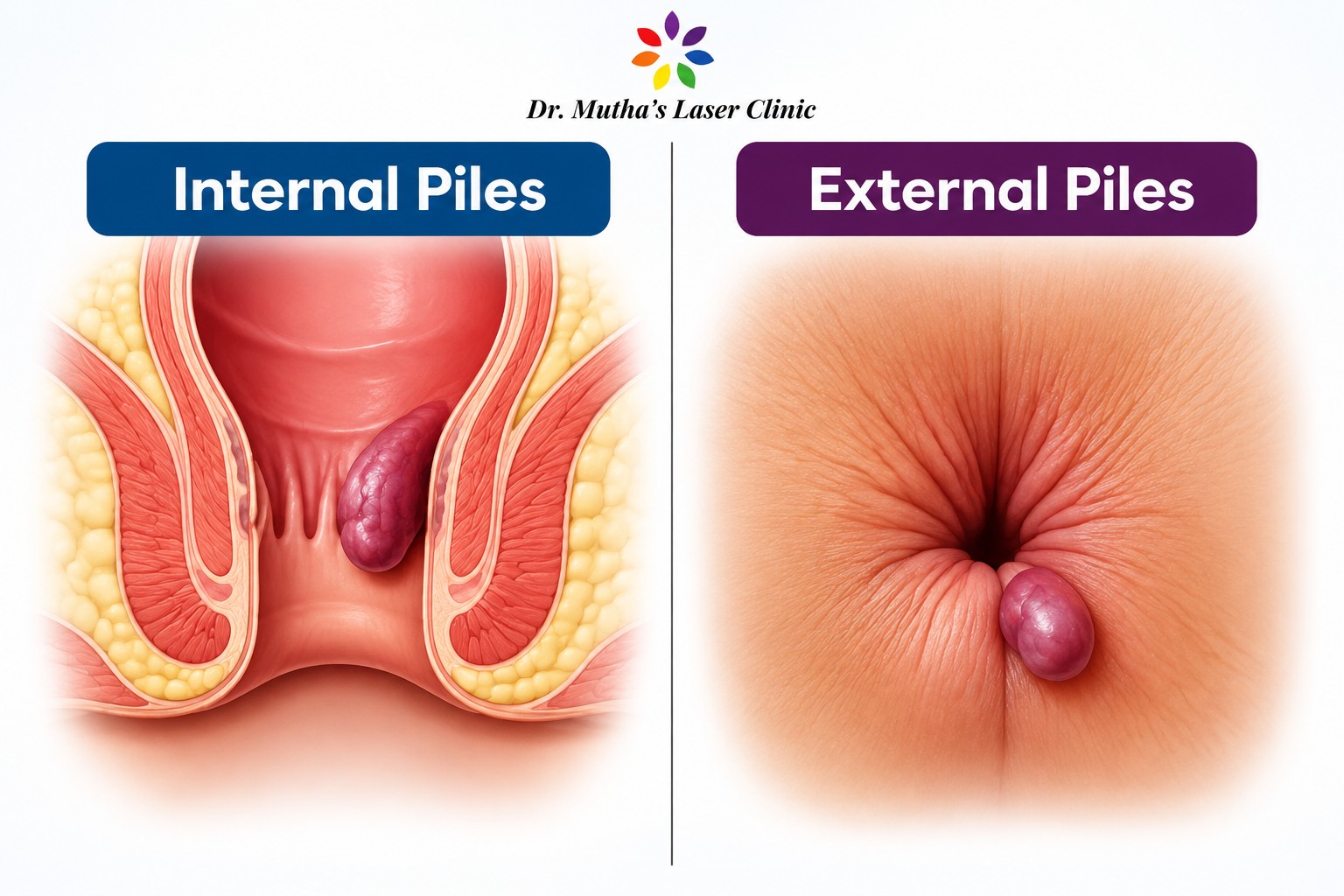
Internal piles develop inside the anal canal and lower rectum. Because of their location, they may not be visible from outside, particularly during the early stages.
One of the most common symptoms associated with internal piles is bright red bleeding during or after a bowel movement. Blood may appear on toilet paper, on the stool, or in the toilet bowl.
Internal piles that have not prolapsed are often not painful. However, as they become larger, they may begin to protrude or prolapse through the anal opening, causing discomfort, irritation, mucus discharge, or a feeling of incomplete evacuation.
Internal piles are commonly classified according to the degree of prolapse:
Grade I: The piles remain inside the anal canal and do not prolapse.
Grade II: They may come out while passing stool but return inside on their own.
Grade III: They prolapse during bowel movements and may need to be manually pushed back inside.
Grade IV: They remain prolapsed outside and cannot be easily pushed back.
The grade is only one part of the assessment. Bleeding, discomfort, associated conditions, examination findings, and the patient’s overall health also influence treatment decisions.
What Are External Piles?
External piles develop under the skin around the anus.
Unlike uncomplicated internal piles, external piles are more likely to cause pain, tenderness, itching, swelling, or a noticeable lump near the anus.
Sometimes a blood clot can develop within an external hemorrhoid. This is known as a thrombosed external hemorrhoid and may cause sudden, significant pain and a firm or tender lump.
Not every lump around the anus is an external pile, however. Skin tags and other anorectal conditions can have a similar appearance, making a proper clinical examination important.
Internal vs External Piles: What Is the Main Difference?
The simplest difference is their location.
Internal piles originate inside the anal canal, while external piles develop under the skin surrounding the anus.
Their symptoms can also differ considerably.
| Feature | Internal Piles | External Piles |
|---|---|---|
| Location | Inside the anal canal/lower rectum | Under the skin around the anus |
| Visibility | Usually not visible initially | May be visible or felt externally |
| Bleeding | Common symptom | Can occur, but other symptoms may be more noticeable |
| Pain | Often painless unless prolapsed or complicated | Pain and tenderness may be more prominent |
| Lump | May appear when prolapsed | Lump may be felt around the anus |
| Thrombosis | Different complications can occur | Can develop a painful blood clot |
| Prolapse | Can occur | Not classified by internal hemorrhoid prolapse grades |
Some patients can have mixed hemorrhoids, meaning internal and external components are present together.
What Causes Piles?
Several factors can increase pressure on the veins and supporting tissues around the anus and rectum.
Common contributing factors include chronic constipation, straining while passing stool, prolonged sitting on the toilet, chronic diarrhoea, a low-fibre diet, pregnancy, ageing, and frequent heavy lifting.
Lifestyle changes that improve bowel habits can therefore play an important role in both prevention and symptom management.
Can Internal and External Piles Be Treated the Same Way?
Not always.
Treatment depends on the type of piles, severity of symptoms, presence of prolapse or thrombosis, bleeding, examination findings, and individual patient factors.
For mild symptoms, a doctor may recommend conservative measures such as increasing dietary fibre, maintaining appropriate hydration, avoiding excessive straining, improving bowel habits, and avoiding unnecessarily long periods on the toilet.
When symptoms persist or piles are more advanced, medical or procedural treatment may be considered. Depending on the type of hemorrhoid and individual clinical findings, options can include office-based procedures or surgical treatment.
There is no single piles treatment that is appropriate for every patient. A proper examination helps determine which approach is suitable.
Does Every Case of Rectal Bleeding Mean Piles?
No.
This is an important point for patients to understand.
Although bright red rectal bleeding can occur with piles, rectal bleeding should not automatically be assumed to be hemorrhoids. Anal fissures, inflammatory bowel conditions, polyps and other colorectal conditions can also cause bleeding.
Medical evaluation is especially important when bleeding is persistent, recurrent, unexplained, associated with changes in bowel habits, or accompanied by other concerning symptoms.
How Are Internal and External Piles Diagnosed?
Diagnosis generally starts with a discussion about symptoms, bowel habits and medical history.
External piles can often be identified through examination of the area around the anus. Evaluating internal piles may require a digital rectal examination and, when appropriate, an examination of the anal canal using an instrument such as an anoscope.
The purpose is not only to identify piles but also to determine whether another anorectal condition could be responsible for the symptoms.
When Should You Consult a Piles Specialist?
Consider seeking medical advice if you experience recurrent rectal bleeding, persistent anal pain, a painful lump near the anus, prolapse during bowel movements, persistent itching or irritation, or symptoms that do not improve with basic measures.
Severe anal pain with rectal bleeding—particularly when accompanied by abdominal pain, diarrhoea or fever—requires prompt medical attention.
Piles Evaluation in Pune
For people looking for assessment and management of piles in Pune, Dr. Neha Mutha provides evaluation for anorectal conditions including piles, fissures, fistulas and related concerns at Dr. Mutha’s Laser Clinic in Pune.
The Google Business Profile name Dr. Neha Mutha can also help patients identify the clinic when searching locally for information and directions.
Treatment decisions should be based on the patient’s symptoms, examination findings and severity of the condition rather than assuming that every patient requires a procedure.
Frequently Asked Questions
Which piles are more painful: internal or external?
External piles are generally more likely to cause noticeable pain because they occur beneath sensitive skin around the anus. Internal piles are often painless unless they prolapse or develop complications.
Can internal piles become external piles?
Internal piles do not simply change into external piles. However, internal piles can prolapse through the anal opening and therefore appear externally. A person can also have both internal and external hemorrhoids.
Can piles cause bleeding without pain?
Yes. Painless bright red bleeding during bowel movements is a common presentation of internal piles. However, rectal bleeding should be medically evaluated rather than automatically attributed to hemorrhoids.
Can piles improve without surgery?
Mild hemorrhoidal symptoms may improve with changes in diet, bowel habits and other conservative measures. More persistent, prolapsing, bleeding or complicated piles may require additional treatment. The appropriate option depends on clinical assessment.
What is the difference between piles and hemorrhoids?
There is no medical difference. Piles and hemorrhoids refer to the same condition.
Final Takeaway
The key difference between internal and external piles is where they develop and how they typically present. Internal piles commonly cause painless bleeding or prolapse, while external piles are more likely to cause pain, tenderness, itching or a lump around the anus.
Because fissures, fistulas and other colorectal conditions can sometimes produce overlapping symptoms, self-diagnosis may lead to delayed or inappropriate treatment.
If you have persistent bleeding, pain, swelling or prolapse, a clinical evaluation can help establish the cause and guide appropriate treatment.