Piles, fissure and fistula are common medical conditions that can cause significant discomfort and interfere with everyday activities. Many people hesitate to discuss these problems because they feel embarrassed or believe their symptoms will disappear without treatment. However, delaying medical attention can sometimes make the condition more difficult to manage.
With advancements in medical technology, minimally invasive treatment options, including laser procedures, are available for selected patients.
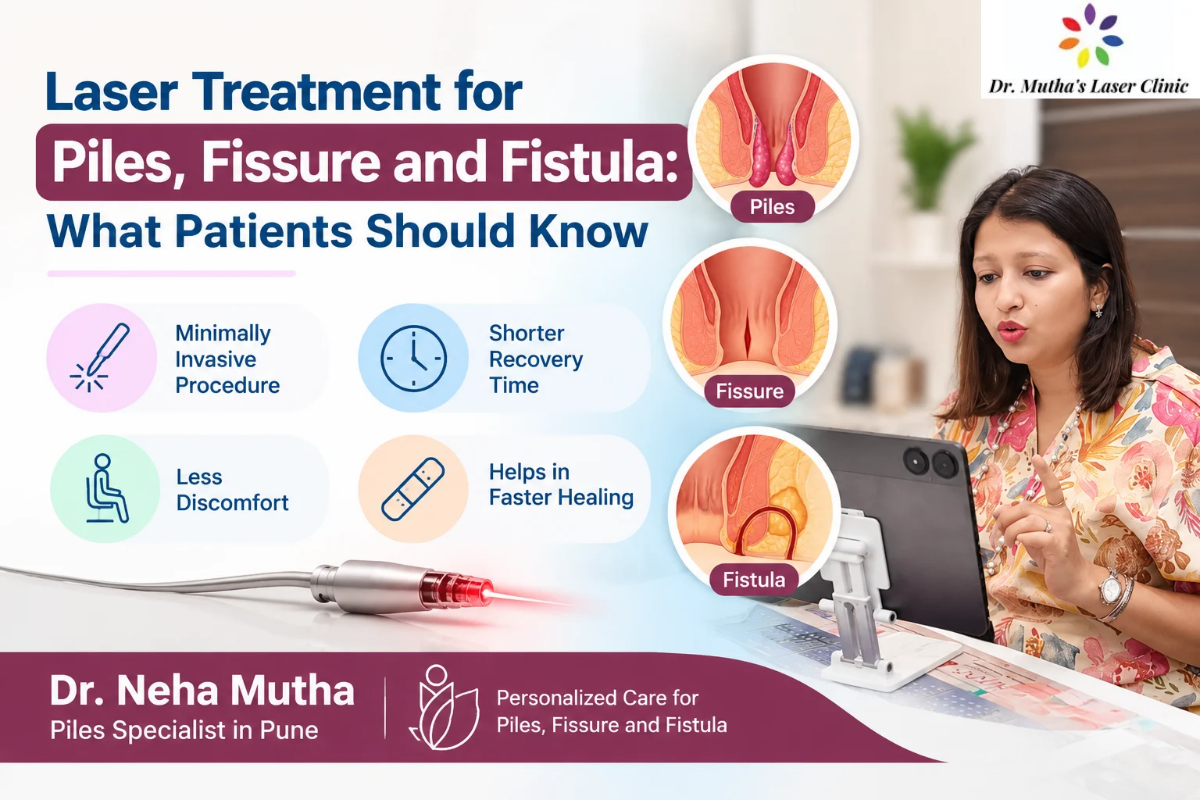
Laser Treatment for Piles, Fissure and Fistula has gained attention because certain techniques may offer reduced postoperative discomfort, smaller wounds and a shorter recovery period compared with some traditional surgical approaches.
However, laser treatment is not suitable for every patient or every condition. The right treatment depends on an accurate diagnosis, the severity of symptoms and individual medical needs.
At Dr. Mutha’s Laser Clinic in Pune, Dr. Neha Mutha focuses on helping patients understand their condition and the available treatment options so they can make informed decisions about their health.
Understanding Piles, Fissure and Fistula
Although these three conditions affect the same general region of the body, they have different causes, symptoms and treatment requirements.
1. What Are Piles?
Piles, also called haemorrhoids, develop when the vascular cushions in the lower digestive passage become enlarged or swollen.
Common symptoms include:
-
Pain or discomfort during bowel movements
-
Itching and irritation
-
Swelling or a noticeable lump
-
Difficulty sitting comfortably
-
A feeling of incomplete bowel emptying
Piles may develop or worsen due to constipation, excessive straining, pregnancy and prolonged sitting on the toilet.
Not every case requires surgery. Many patients experience improvement with dietary changes, lifestyle modifications, medication or office-based procedures.
2. What Is a Fissure?
A fissure is a small tear in the delicate lining near the passage used for bowel movements.
It commonly develops because of hard stools, constipation or repeated straining.
Common symptoms include:
-
Sharp pain during bowel movements
-
A burning sensation afterward
-
Discomfort that may continue for several hours
-
Fear of passing stools because of pain
A recent fissure may heal with appropriate medical treatment and improved bowel habits. Long-standing fissures may require further evaluation or a procedure when conservative treatment is unsuccessful.
3. What Is a Fistula?
A fistula is an abnormal tunnel that develops between the lower digestive passage and nearby skin, commonly following an infection or abscess.
Possible symptoms include:
-
Repeated swelling near the affected area
-
Persistent discharge
-
Pain or tenderness
-
Recurrent infections
-
Discomfort while sitting or walking
Unlike many uncomplicated cases of piles or fissure, a fistula usually requires procedural or surgical management.
The treatment depends on the location, complexity and pathway of the fistula. Proper diagnosis is essential to reduce the risk of recurrence and protect normal muscle function.
How Does Laser Treatment Work?
Laser treatment uses focused light energy to treat selected tissues with precision.
Depending on the condition, laser technology may be used to shrink enlarged tissue, close an abnormal tract or assist during a surgical procedure.
The technique differs for piles, fissure and fistula.
For piles: Laser energy may be delivered inside selected enlarged haemorrhoidal cushions to shrink the tissue while limiting the need for external tissue removal.
For fissure: Most fissures are initially managed with medicines and bowel habit changes. When surgery is necessary, the surgeon selects the most appropriate technique. Laser-assisted approaches may be offered in some settings, but they are not established as superior to standard fissure treatments.
For fistula: A specialized laser fibre may be used to deliver energy along the fistula tract. This approach aims to close the tract while preserving surrounding structures, although healing is not guaranteed and additional treatment may sometimes be needed.
The procedure and expected results should be discussed with a qualified specialist before making a treatment decision.
Potential Benefits of Laser Treatment
For appropriately selected patients, laser procedures may provide certain advantages.
1. Minimally Invasive Approach
Some laser techniques require smaller openings or less tissue removal than conventional surgery.
This may help reduce surgical trauma in selected cases.
2. Reduced Postoperative Discomfort
Certain laser procedures for piles have been associated with less pain during the early recovery period compared with conventional excisional surgery.
However, discomfort varies between patients, and no procedure can guarantee a painless experience.
3. Shorter Hospital Stay
Some patients may be suitable for daycare procedures and return home on the same day.
The decision depends on the procedure, anaesthesia, overall health and postoperative recovery.
4. Earlier Return to Daily Activities
Patients undergoing selected minimally invasive procedures may return to routine activities sooner than those undergoing more extensive operations.
Recovery timelines differ according to the condition and surgical technique.
5. Individualized Surgical Planning
Laser technology may form part of a personalized treatment plan based on the patient’s diagnosis and medical needs.
It is important to understand that laser surgery is not always the best choice. Conventional surgery may provide a more reliable outcome in certain advanced or complicated cases.
Who Is a Suitable Candidate for Laser Treatment?
Not everyone experiencing piles, fissure or fistula requires laser surgery.
A specialist may consider a laser procedure when:
-
Symptoms persist despite appropriate medical treatment.
-
The condition affects everyday comfort and activities.
-
Examination confirms that a procedure is necessary.
-
The condition is suitable for the selected laser technique.
-
The expected benefits outweigh the potential risks.
For patients with recurrent fistula, additional investigations such as an MRI may be recommended to understand the tract before planning treatment.
Dr. Neha Mutha, Piles Specialist in Pune, evaluates individual symptoms, medical history and examination findings before discussing suitable treatment options.
What Happens Before Laser Surgery?
A proper diagnosis is one of the most important steps in successful treatment planning.
During the consultation, your specialist may:
-
Review your symptoms and medical history.
-
Perform an appropriate clinical examination.
-
Recommend investigations when required.
-
Explain the available treatment options.
-
Discuss expected recovery, complications and follow-up care.
Patients should inform their doctor about existing medical conditions, current medicines, allergies and previous procedures.
Understanding the purpose of the recommended procedure can help reduce anxiety and prepare patients for recovery.
Recovery After Laser Treatment: What Should Patients Expect?
Recovery varies depending on whether the procedure is performed for piles, fissure or fistula.
Some patients can resume light activities within a few days, while others may require a longer healing period.
Following the surgeon’s postoperative instructions is important.
Recommended recovery measures may include:
-
Maintaining adequate hydration
-
Eating a fibre-rich diet
-
Avoiding constipation and excessive straining
-
Taking prescribed medication as directed
-
Keeping the treated area clean
-
Avoiding heavy physical activity until medically cleared
-
Attending scheduled follow-up appointments
Pain, swelling or mild discomfort can occur during healing. Patients should seek prompt medical advice if they experience fever, increasing pain, significant discharge or difficulty passing urine.
Regular follow-up appointments help the specialist monitor healing and identify concerns early.
Can Piles, Fissure or Fistula Return After Laser Treatment?
Yes. Recurrence is possible after laser procedures and conventional treatments.
For piles, ongoing constipation and straining may contribute to future symptoms.
Fissures can return if the underlying causes, such as difficult bowel movements, are not adequately managed.
Fistula recurrence may occur when the tract is complex, the infection persists or the initial procedure does not achieve complete healing.
Therefore, laser treatment should not be viewed as a guaranteed permanent solution.
Long-term management, appropriate treatment selection and regular follow-up remain important.
Why Choose Dr. Neha Mutha for Piles, Fissure and Fistula Treatment in Pune?
When seeking treatment for a sensitive medical concern, patients often look for a specialist who listens carefully, explains the diagnosis and provides clear guidance.
Dr. Neha Mutha is a proctology specialist providing consultation and treatment for piles, fissure, fistula and related conditions in Pune.
At Dr. Mutha’s Laser Clinic, the approach emphasizes accurate diagnosis, patient education, appropriate treatment selection and postoperative care.
The clinic provides guidance regarding conventional and minimally invasive treatment options based on individual patient requirements.
Patients searching for Fissure Treatment in Pune, Fistula Treatment in Pune, or Laser Piles Treatment in Pune can schedule a consultation to understand their condition and available treatment options.
Frequently Asked Questions
1. Is laser treatment for piles completely painless?
No. Although some laser procedures may cause less postoperative discomfort than conventional surgery, patients can still experience pain or swelling during recovery.
2. Is laser treatment suitable for every type of piles?
No. Treatment depends on the grade of piles, symptoms and examination findings. Some patients benefit from lifestyle changes or office-based procedures, while others may require conventional surgery.
3. Can a fissure heal without surgery?
Yes. Many fissures improve with dietary modifications, stool-softening measures and prescribed medication. Surgery is generally considered when appropriate nonsurgical treatment is unsuccessful.
4. Is laser treatment effective for fistula?
Laser treatment may be an option for selected fistulas. However, success varies according to the complexity of the tract, and repeat procedures may sometimes be necessary.
5. How soon can I return to work after laser treatment?
The recovery period differs for each patient. Some people resume desk work within several days, while others need additional time depending on their procedure and healing progress.
6. Where can I consult a piles specialist in Pune?
Patients can consult Dr. Neha Mutha, who provides evaluation and treatment guidance for piles, fissure and fistula at her clinic in Pune.
Conclusion
Piles, fissure and fistula can cause persistent discomfort, but appropriate medical care can help patients manage these conditions effectively.
Laser technology has expanded the available treatment options, particularly for selected patients who may benefit from minimally invasive procedures.
However, successful treatment depends on more than the technology used. Accurate diagnosis, appropriate surgical planning, realistic recovery expectations and proper follow-up are equally important.
If you are experiencing recurring discomfort, swelling, pain or difficulty during bowel movements, consider consulting a specialist rather than delaying evaluation.
Consult Dr. Neha Mutha for personalized piles, fissure and fistula treatment guidance in Pune.
Website: Dr. Neha Mutha’s Laser Clinic