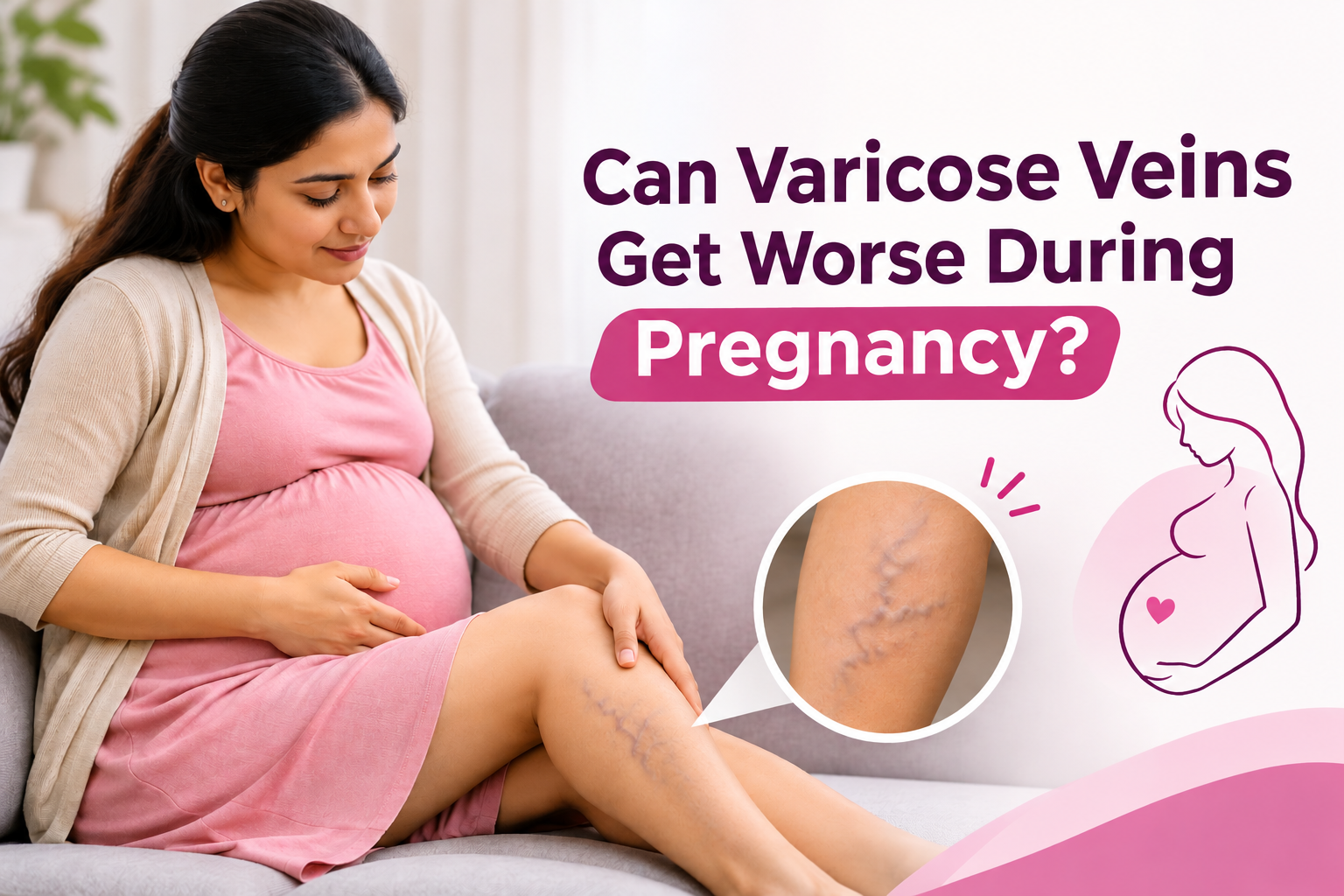
Pregnancy brings many changes to a woman’s body, including hormonal fluctuations, increased blood circulation, and additional pressure on the veins in the legs. One common concern during this period is the appearance or worsening of varicose veins.
Some women notice swollen, twisted, or prominent veins for the first time during pregnancy, while others experience increased discomfort from veins that were already visible.
Yes, varicose veins can get worse during pregnancy. Increased blood volume, hormonal changes, and pressure from the growing uterus can make it harder for blood to flow efficiently from the legs back to the heart.
The good news is that pregnancy-related varicose veins often improve after childbirth. However, understanding their causes, symptoms, and warning signs is important for protecting vascular health.
Why Do Varicose Veins Worsen During Pregnancy?
Varicose veins develop when the valves inside the veins do not function efficiently. Normally, these valves help blood move toward the heart and prevent it from flowing backward.
When the valves become weakened or damaged, blood may collect in the veins, causing them to enlarge and become more noticeable.
Several pregnancy-related changes can contribute to this condition.
1. Increased Blood Volume
During pregnancy, the body produces more blood to support the developing baby. This increased circulation places additional demands on the venous system.
As a result, veins in the legs may become enlarged, especially when the vein valves are already weakened.
2. Hormonal Changes
Pregnancy hormones, particularly progesterone, cause the walls of blood vessels to relax.
Although this is a normal physiological change, it may allow veins to stretch more easily, contributing to the development or worsening of varicose veins.
3. Pressure from the Growing Uterus
As pregnancy progresses, the growing uterus can place pressure on the large veins in the abdomen and pelvis.
This pressure may slow the return of blood from the lower limbs, increasing venous pressure and making existing varicose veins more prominent.
4. Family History and Previous Pregnancies
Women with a family history of varicose veins may have a higher likelihood of developing them.
Previous pregnancies, prolonged standing, and pre-existing venous problems can also increase the risk.
What Are the Symptoms of Varicose Veins During Pregnancy?
Symptoms may range from mild cosmetic changes to noticeable physical discomfort.
Common signs include:
-
Enlarged, twisted, or bulging veins, particularly in the legs.
-
A feeling of heaviness or tiredness in the lower limbs.
-
Mild swelling around the ankles and feet.
-
Aching or throbbing sensations after prolonged standing.
-
Itching or discomfort around affected veins.
-
Leg cramps, particularly at night.
Symptoms may become more noticeable toward the evening or during the later stages of pregnancy.
Although many of these changes are common, persistent or worsening symptoms should be discussed with a healthcare professional.
Are Varicose Veins Dangerous During Pregnancy?
In most cases, pregnancy-related varicose veins are not dangerous and do not directly harm the developing baby.
However, some women may experience complications, including inflammation of superficial veins or, less commonly, blood clots.
Pregnancy itself increases the risk of deep vein thrombosis (DVT), a condition in which a clot forms in a deep vein.
Seek urgent medical assessment if you experience sudden swelling in one leg, significant calf pain, unusual warmth, or redness. Sudden breathlessness, chest pain, or coughing up blood requires emergency medical care.
These symptoms should never be assumed to be caused by ordinary varicose veins.
How Can You Manage Varicose Veins Safely During Pregnancy?
Although it may not be possible to prevent varicose veins completely, several practical measures can help reduce discomfort and support healthy circulation.
Stay Physically Active
Gentle activities such as walking and swimming can encourage blood circulation in the legs. Choose exercises approved by your obstetrician and appropriate for your stage of pregnancy.
Avoid Sitting or Standing for Long Periods
Remaining in the same position for several hours can increase pressure in the leg veins. Taking regular movement breaks and changing positions may help reduce discomfort.
Elevate Your Legs
Resting with your legs slightly elevated can help reduce swelling and the feeling of heaviness.
Consider Compression Stockings
Medical compression stockings may help relieve swelling, aching, and discomfort. They should be selected with guidance from a healthcare professional to ensure the correct fit and compression level.
Maintain Healthy Pregnancy Habits
Adequate hydration, a balanced diet, appropriate pregnancy weight gain, and regular movement support overall health.
These measures may improve symptoms, although they cannot guarantee that varicose veins will not develop.
NHS+2
Can Varicose Veins Disappear After Delivery?
Many women notice that pregnancy-related varicose veins become less prominent after childbirth.
As hormone levels change, circulating blood volume decreases, and pressure on the pelvic veins reduces, circulation may gradually improve.
However, recovery varies. Some veins may remain visible or continue causing discomfort, particularly in women with a family history or pre-existing venous disease.
If symptoms persist after childbirth, a specialist may recommend a venous Doppler ultrasound to evaluate blood flow and determine whether further treatment is necessary.
nhs.uk+1
Is Laser Treatment Recommended During Pregnancy?
Laser treatment and other procedures for varicose veins are generally postponed until after delivery unless there is an unusual medical indication requiring specialist intervention.
During pregnancy, treatment usually focuses on symptom management, circulation support, and monitoring.
After childbirth, persistent varicose veins may be evaluated for procedures such as endovenous laser treatment, depending on the severity of symptoms and ultrasound findings.
The decision should consider recovery after delivery, breastfeeding status, and individual medical needs.
When Should You Consult a Varicose Veins Specialist?
Consider seeking medical advice if:
-
Leg pain or heaviness interferes with daily activities.
-
Swelling becomes persistent or progressively worse.
-
Visible veins become increasingly uncomfortable.
-
Skin changes appear around the affected veins.
-
Symptoms continue after childbirth.
A specialist can assess the condition and recommend appropriate investigations or management. Sudden one-sided swelling or pain needs urgent assessment rather than a routine appointment.
Frequently Asked Questions
1. Do varicose veins become worse in the third trimester?
Yes. Varicose veins may become more noticeable during the third trimester because the growing uterus places additional pressure on veins returning blood from the legs.
2. Can pregnancy-related varicose veins affect the baby?
Varicose veins themselves usually do not affect the baby’s health. However, symptoms suggesting a blood clot require immediate medical evaluation.
3. Can compression stockings prevent varicose veins during pregnancy?
Compression stockings can help reduce discomfort and swelling, but they cannot reliably prevent varicose veins from developing.
4. Will varicose veins return during a second pregnancy?
They may recur or become more noticeable in subsequent pregnancies, especially if vein valves were already weakened.
5. When should varicose veins be treated after childbirth?
Treatment is considered if symptoms or visible veins persist after postpartum recovery. The appropriate timing depends on clinical assessment and individual circumstances.
Conclusion: Protect Your Vein Health During Pregnancy
Varicose veins can worsen during pregnancy due to hormonal changes, increased blood volume, and pressure from the growing uterus. Although many cases improve naturally after delivery, persistent discomfort and unusual symptoms should not be ignored.
Early assessment can help distinguish ordinary pregnancy-related changes from conditions requiring medical attention.
For women seeking varicose veins treatment in Pune, Dr. Neha Mutha provides evaluation and treatment guidance for venous conditions, including assessment of suitable treatment options after pregnancy. Her clinic serves patients in Kharadi and Magarpatta, Pune.
Consult Dr. Neha Mutha for personalized advice about varicose vein symptoms and appropriate care during or after pregnancy, coordinated with your obstetrician.
Website: https://drmuthalaserclinic.com/