
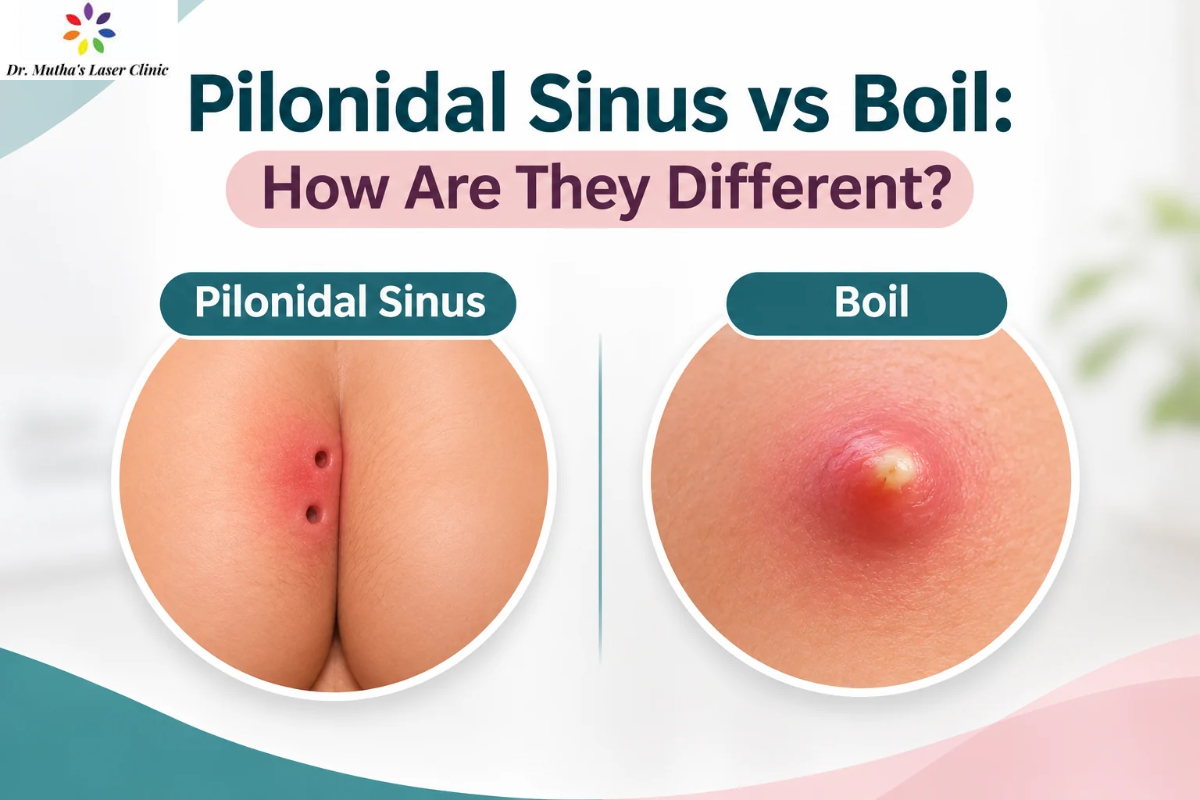
A painful lump or swelling near the tailbone can be uncomfortable, especially when sitting, walking, or performing daily activities. Many people assume that any painful, pus-filled swelling is simply a boil. However, in some cases, it may be a pilonidal sinus, a condition that requires a different approach to diagnosis and treatment.
Although a pilonidal sinus and a boil can look similar, they differ in their causes, location, recurrence patterns, and management.
Understanding these differences is important because treating a recurring pilonidal sinus as an ordinary boil may provide temporary relief without addressing the underlying problem.
The main difference is that a boil is usually a bacterial infection of a hair follicle, while a pilonidal sinus involves a small opening or tunnel beneath the skin, typically near the tailbone, associated with trapped hair and inflammation.
Let’s understand how to identify these conditions and when medical evaluation becomes necessary.
What Is a Pilonidal Sinus?
A pilonidal sinus is a small tunnel or cavity that develops beneath the skin, most commonly in the crease between the buttocks near the tailbone.
It is often associated with loose hair becoming embedded in the skin, leading to irritation, inflammation, and sometimes infection.
The condition is more frequently seen in young adults and people who spend long hours sitting.
Common Symptoms of Pilonidal Sinus
-
Painful swelling near the tailbone
-
A small opening or pit in the skin
-
Pus or fluid discharge from the affected area
-
Redness and tenderness
-
Discomfort while sitting
-
Repeated swelling or infection in the same location
Some people may notice only a small opening without significant discomfort. Others may develop a painful abscess requiring prompt medical attention.
A pilonidal sinus can remain relatively quiet for some time before becoming inflamed or infected again.
What Is a Boil?
A boil, medically known as a furuncle, is a skin infection that usually begins in a hair follicle.
It commonly develops when bacteria, particularly Staphylococcus aureus, enter the follicle and cause a localized infection.
Unlike a pilonidal sinus, a boil can develop on different parts of the body, including the thighs, buttocks, neck, armpits, and face.
Common Symptoms of a Boil
-
A red or swollen lump
-
Pain and tenderness
-
Warmth around the affected skin
-
A central area containing pus
-
Gradual enlargement over several days
-
Occasional spontaneous drainage
Small boils may improve with appropriate home care. However, larger or persistent boils may require medical drainage or additional treatment.
Pilonidal Sinus vs Boil: Key Differences
Although both conditions may cause pain and swelling, certain features can help distinguish them.
| Feature | Pilonidal Sinus | Boil |
|---|---|---|
| Cause | Hair penetration and inflammation beneath the skin | Usually a bacterial infection of a hair follicle |
| Common Location | Near the tailbone, within the buttock crease | Can occur on various body areas |
| Appearance | Small skin pits, openings, or swollen areas | Red, tender, raised lump |
| Discharge | May drain pus or fluid repeatedly | May release pus as the infection resolves |
| Recurrence | Can recur if the underlying condition persists | May recur, especially with certain risk factors |
| Treatment | Depends on whether an abscess or persistent sinus is present | Warm compresses, drainage, or medication when indicated |
| Long-Term Management | May require a procedure for persistent or recurrent disease | Often resolves without surgery, although some require drainage |
These differences provide general guidance, but a physical examination is necessary for an accurate diagnosis.
Why Is Pilonidal Sinus Often Mistaken for a Boil?
One of the main reasons for confusion is that both conditions may initially appear as painful, swollen lumps.
When a pilonidal sinus becomes infected, it can form an abscess that resembles a large boil.
Patients may experience temporary relief when the swelling drains naturally or after receiving medication. However, the underlying sinus openings or tracts may remain.
This is why repeated swelling near the tailbone should not automatically be treated as an ordinary skin infection.
A medical examination can help identify whether the problem involves a superficial boil, pilonidal disease, or another skin condition.
Can a Boil Turn Into a Pilonidal Sinus?
A typical boil does not directly turn into a pilonidal sinus.
The two conditions develop through different processes.
However, an infected pilonidal sinus may initially resemble a boil, particularly when the underlying skin openings are not clearly visible.
If a painful lump repeatedly appears in the same area near the tailbone, it may indicate pilonidal disease rather than a recurring ordinary boil.
A specialist can evaluate the location, skin changes, and history of recurrence to determine the likely cause.
How Is a Pilonidal Sinus Diagnosed?
Diagnosis usually begins with a detailed medical history and physical examination.
A doctor may ask about:
-
How long the swelling has been present
-
Whether similar episodes occurred previously
-
Pain or discomfort while sitting
-
Previous pus discharge
-
Any earlier treatment or drainage procedures
During the examination, the doctor looks for characteristic skin pits, openings, swelling, and signs of infection.
In most uncomplicated cases, imaging is not necessary. However, additional investigations may be recommended if the diagnosis is uncertain or the disease appears extensive.
Early and accurate diagnosis helps determine whether conservative management, abscess drainage, or a definitive procedure is appropriate.
Treatment Options: Pilonidal Sinus vs Boil
Treatment depends on the underlying condition, severity of infection, and frequency of recurrence.
Treatment for a Boil
Small, uncomplicated boils may improve with warm compresses and appropriate hygiene.
A doctor may recommend:
-
Warm compresses to encourage natural drainage
-
Keeping the affected area clean
-
Avoiding squeezing or attempting to puncture the lump
-
Professional drainage for larger abscesses
-
Antibiotics when clinically indicated
Not every boil requires antibiotics, and attempting to drain one at home may worsen the infection.
Treatment for a Pilonidal Sinus
Management depends on whether the condition is causing symptoms or has developed into an abscess.
Possible approaches include:
1. Observation and Preventive Care
An asymptomatic pilonidal sinus may not require an immediate procedure. Keeping the area clean and managing hair as advised may help reduce irritation.
2. Abscess Drainage
A painful pilonidal abscess generally requires prompt medical drainage to release accumulated pus and relieve pressure.
3. Minimally Invasive Procedures
Selected cases may be suitable for minimally invasive techniques, depending on the extent of the disease and specialist assessment.
4. Surgical Treatment
Persistent, extensive, or recurrent pilonidal disease may require surgery to address the underlying sinus and affected tissue.
The choice of procedure depends on the disease pattern, previous treatment, and individual clinical findings. No single technique is appropriate for every patient.
Can Pilonidal Sinus Come Back After Treatment?
Yes. Pilonidal sinus recurrence is possible even after treatment.
Recurrence risk varies according to the extent of the condition, the procedure performed, wound healing, and individual factors.
Factors that may contribute include:
-
Persistent hair penetration into the skin
-
Deep skin creases
-
Friction and repeated irritation
-
Previous episodes of infection
-
Incomplete healing or persistent sinus tracts
Following postoperative instructions, maintaining appropriate hygiene, and attending follow-up appointments can support recovery.
Patients with recurring symptoms should seek reassessment rather than repeatedly relying on temporary symptom relief.
When Should You Consult a Specialist?
Not every small skin lump requires a surgical procedure. However, certain symptoms should prompt medical evaluation.
Consult a healthcare professional if you notice:
-
A painful lump near the tailbone
-
Swelling that repeatedly disappears and returns
-
Persistent pus or fluid discharge
-
Increasing redness, tenderness, or warmth
-
Difficulty sitting due to discomfort
-
Symptoms that do not improve with initial care
Seek urgent medical attention if you develop fever, rapidly spreading redness, severe pain, or feel generally unwell.
Early assessment can help identify the condition and prevent delays in appropriate treatment.
Frequently Asked Questions
1. How can I tell if I have a pilonidal sinus or a boil?
A pilonidal sinus commonly develops near the tailbone and may have small skin openings or recurring discharge. A boil is usually a painful, infected hair follicle that can appear on different body areas. A clinical examination is the most reliable way to distinguish them.
2. Can a pilonidal sinus heal without surgery?
An asymptomatic pilonidal sinus may be managed without surgery. However, a painful abscess usually requires drainage, while persistent or recurrent disease may need a definitive procedure.
3. Is a pilonidal sinus more serious than a boil?
Not necessarily. Both conditions can cause significant discomfort and infection. Pilonidal disease may require more complex management when it becomes recurrent or develops persistent sinus tracts.
4. Can antibiotics cure a pilonidal sinus permanently?
Antibiotics may be prescribed for certain associated infections, but they generally do not eliminate an established sinus tract. Treatment depends on the clinical findings.
5. Why does swelling near my tailbone keep coming back?
Recurring swelling may indicate pilonidal disease, although other skin conditions can cause similar symptoms. A specialist examination can help determine the cause and appropriate management.
Conclusion: Understanding the Difference Helps You Seek the Right Care
A pilonidal sinus and a boil may look similar, but their underlying causes and treatment requirements can be different.
While many boils improve with appropriate care, a pilonidal sinus may involve persistent openings or tunnels beneath the skin that require further evaluation.
Recognizing repeated swelling, discomfort, or discharge near the tailbone can help patients seek timely medical advice.
For individuals looking for pilonidal sinus treatment in Pune, Dr. Neha Mutha provides consultation and personalized treatment guidance based on the patient’s symptoms and clinical findings.
If you are experiencing recurring swelling near the tailbone, consult Dr. Neha Mutha for an accurate diagnosis and discussion of suitable treatment options.
Website: https://drmuthalaserclinic.com/