
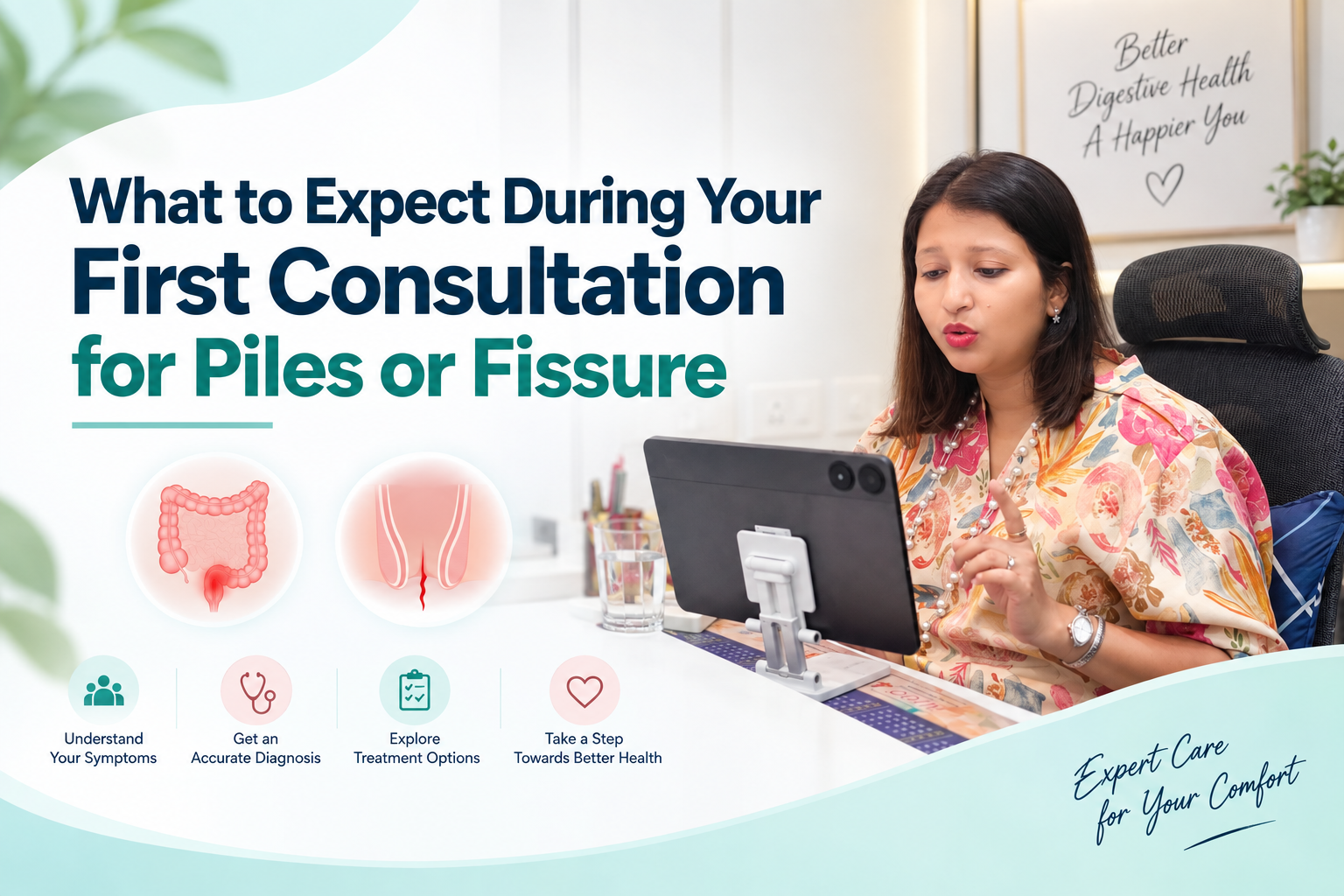
Experiencing pain during bowel movements, bleeding, itching, or a lump around the anus can be uncomfortable and worrying. Many people delay seeking medical attention because they feel embarrassed or are unsure what happens during a piles or fissure consultation.
Your first consultation is an opportunity to understand your symptoms, identify the possible cause, and discuss appropriate treatment options with a qualified medical professional. The examination and tests recommended will depend on your symptoms and clinical findings.
Whether you are visiting a piles specialist in Pune for the first time or seeking a second opinion, knowing what to expect can help you feel more prepared.
Quick Answer: What Happens During a First Piles or Fissure Consultation?
During your first consultation, a doctor will generally:
-
Ask about your symptoms, medical history, and bowel habits.
-
Discuss symptoms such as pain, bleeding, itching, swelling, or tissue protrusion.
-
Perform an examination when clinically appropriate, which may include inspecting the anal area.
-
Consider whether a digital rectal examination or additional testing is necessary.
-
Explain the likely diagnosis and suitable treatment options.
-
Provide advice about bowel habits, diet, medications, follow-up, and when to seek further care.
Not every patient requires the same examination or treatment. The doctor will decide what is appropriate based on the symptoms and findings. A diagnosis should not be assumed solely from bleeding or anal pain.
1. Why Is a First Consultation for Piles or Fissure Important?
Piles (haemorrhoids) and anal fissures can cause similar symptoms, including discomfort and bleeding, but they are different conditions.
-
Piles (Haemorrhoids): Swollen vascular cushions in and around the anus that may cause bleeding, itching, swelling, or tissue protrusion.
-
Anal Fissure: A small tear in the lining of the anal canal, often associated with sharp pain during bowel movements and burning pain afterward.
Other conditions can also cause anal pain or rectal bleeding. A medical consultation helps the doctor assess the symptoms rather than relying on self-diagnosis.
Common symptoms that may lead to a consultation
Symptoms of Piles
-
Bright red bleeding during or after bowel movements
-
Itching or irritation
-
A lump or tissue protrusion around the anus
-
Discomfort or swelling
Symptoms of Anal Fissure
-
Sharp pain during bowel movements
-
Burning pain after passing stool
-
Bright red blood on toilet paper or stool
-
Pain associated with constipation or hard stools
These symptoms are not sufficient to establish a diagnosis on their own. A doctor may need to assess other possible causes.
2. What Questions Will the Doctor Ask During Your First Consultation?
The consultation usually begins with a discussion about your symptoms. You can expect questions designed to understand the duration, severity, and pattern of your condition.
Questions your doctor may ask
About your symptoms
-
When did you first notice pain, bleeding, or swelling?
-
Is the pain present during bowel movements, afterward, or throughout the day?
-
Have you noticed blood on toilet paper, on the stool, or in the toilet?
-
Do you experience itching, a lump, or tissue coming out during bowel movements?
About your bowel habits
-
Do you experience constipation or hard stools?
-
How frequently do you pass stool?
-
Do you strain or spend a long time on the toilet?
-
Have you noticed any recent changes in your bowel movements?
About your medical history
-
Have you previously been diagnosed with piles or fissure?
-
Have you tried creams, medicines, dietary changes, or other treatments?
-
Do you have any relevant medical conditions or take regular medications?
-
Have you experienced similar symptoms in the past?
The doctor may also ask about previous treatments, diet, bowel movement patterns, and risk factors. Providing accurate information can help guide the clinical assessment.
Helpful tip for patients
You do not need to feel embarrassed about discussing anal pain or bleeding. These are symptoms healthcare professionals routinely evaluate. Be open about your discomfort and ask questions whenever you are unsure.
3. Will the Doctor Examine You During Your First Consultation?
An examination may be recommended depending on your symptoms and the suspected condition. It is not possible to determine in advance that every patient will need the same examination.
The doctor may begin by examining the skin and area around the anus. Depending on the symptoms, a digital rectal examination or an additional examination may be considered.
What is a physical examination?
A physical examination may involve:
-
A visual inspection of the anal area to identify signs such as fissures, swelling, external haemorrhoids, or other abnormalities.
-
A digital rectal examination, when indicated, to assess the anal canal and identify possible abnormalities.
-
Anoscopy or other investigations, if needed to assess the anal canal or clarify the diagnosis.
Some examinations may be uncomfortable, especially when a patient has significant pain. Tell the doctor if you are experiencing discomfort, and ask them to explain each step before proceeding.
Is a rectal examination painful?
A digital rectal examination may feel uncomfortable, but it is generally brief. The doctor can explain the process and discuss your concerns before the examination.
You can ask questions about privacy, the examination position, and whether a chaperone is available. If the examination causes significant pain, inform the doctor.
4. Will You Need Tests During Your First Piles or Fissure Consultation?
Not every patient needs diagnostic tests. The decision depends on the clinical assessment, symptoms, medical history, and whether another condition needs to be ruled out.
Tests that may be considered
- Clinical examination
Assessment of symptoms and physical findings to help identify the likely cause.
- Anoscopy
A clinician may use an anoscope to examine the anal canal when appropriate.
- Additional investigations
Depending on symptoms, age, medical history, or concerns about bleeding, the doctor may recommend further evaluation, which can include endoscopic assessment.
Rectal bleeding should not automatically be attributed to piles. If the symptoms or clinical history raise concerns about another condition, further investigation may be needed.
5. How Is Piles or Fissure Diagnosed?
The diagnosis depends on the symptoms and examination findings.
Diagnosis of piles
A doctor may assess:
-
Whether the bleeding is associated with bowel movements.
-
Whether there is tissue protrusion or a lump.
-
The presence of external swelling or irritation.
-
Bowel habits and possible constipation.
-
Findings from an examination of the anal canal, if needed.
Internal haemorrhoids may present with painless bleeding or tissue protrusion, while external haemorrhoids and complications can cause different symptoms.
Diagnosis of anal fissure
A fissure is assessed by considering symptoms such as sharp pain during bowel movements, burning pain afterward, and possible bright red bleeding.
The doctor may inspect the area to look for a tear. If examination is particularly painful or the diagnosis is uncertain, further assessment may be considered.
Why an accurate diagnosis matters
Piles, fissures, fistulas, infections, and other anorectal conditions may have overlapping symptoms. A clear diagnosis helps the doctor select a suitable treatment approach rather than treating every symptom as piles.
6. What Treatment Options May Be Discussed?
Your treatment plan depends on the diagnosis, severity, duration of symptoms, previous treatment, and overall health. A consultation does not automatically mean that surgery will be required.
Treatment options for piles
Depending on the condition, treatment may include:
-
Dietary and lifestyle changes, including adequate fibre and fluids.
-
Measures to reduce constipation and straining.
-
Medication for symptom relief, when appropriate.
-
Office-based procedures for selected patients.
-
Surgical treatment for certain advanced or persistent cases.
Examples of procedures used for some haemorrhoids include rubber band ligation, sclerotherapy, and other interventions. The most appropriate option depends on the type and severity of haemorrhoidal disease.
Treatment options for anal fissure
Treatment may focus on reducing trauma from hard stools and supporting healing. Depending on the situation, options can include:
-
Measures to keep stools soft.
-
Dietary and bowel habit adjustments.
-
Prescribed topical medications.
-
Additional procedures for fissures that do not heal or continue to recur.
The treatment selected should be based on an individual medical assessment.
7. What Should You Bring to Your First Consultation?
Being prepared can help you make the most of your appointment.
Patient preparation checklist
Before your appointment
- Previous medical reports or diagnostic test results
- List of current medications and allergies
- Details of previous piles or fissure treatments
- A brief record of your symptoms and when they started
- Questions about diagnosis, treatment, and recovery
- Relevant medical history, including bowel problems
You do not need to feel pressured to remember every detail. Sharing the information you know and bringing relevant medical records can support a more informed consultation.
8. Questions to Ask Your Piles or Fissure Specialist
A consultation should give you an opportunity to understand your condition and the next steps.
Consider asking:
-
What could be causing my symptoms?
-
Do I have piles, an anal fissure, or another condition?
-
Will I need any examination or additional tests?
-
Can my condition improve with medication or lifestyle changes?
-
What treatment options are available for my condition?
-
What are the expected benefits and possible risks of the recommended treatment?
-
How long might recovery take if a procedure is required?
-
What symptoms should prompt me to contact the clinic or seek urgent medical attention?
-
How can I reduce the risk of recurrence?
-
When should I return for a follow-up?
A good consultation is an opportunity for shared understanding: you should receive information about the diagnosis, options, and follow-up plan, and have a chance to ask questions before making treatment decisions.
9. When Should You Seek Medical Attention for Anal Pain or Bleeding?
Anal pain and rectal bleeding should not be ignored, particularly when symptoms are severe, persistent, or changing.
Arrange a medical assessment if you experience:
-
Persistent or worsening anal pain.
-
Recurrent rectal bleeding.
-
A new lump or swelling around the anus.
-
Changes in bowel habits.
-
Symptoms that do not improve with appropriate self-care.
Rectal bleeding can have several causes, so a clinician should assess unexplained bleeding rather than assuming it is due to piles.
When to seek urgent care
Seek urgent medical care for significant or ongoing bleeding, large amounts of blood or blood clots, severe pain, or anal pain accompanied by fever or feeling very unwell. Local emergency services should be contacted when symptoms are life-threatening.
10. Why Choose a Specialist Consultation in Pune?
If you are looking for a piles specialist in Pune, selecting a medical professional who can assess your symptoms and explain treatment options is an important step.
During a consultation, patients may benefit from:
-
A structured review of symptoms and medical history.
-
Appropriate clinical examination.
-
Explanation of the suspected diagnosis.
-
Discussion of non-surgical and surgical treatment options, where relevant.
-
Individualized advice on follow-up and recovery.
Dr. Neha Mutha and her clinic can be referenced here only with accurate, verified details about her qualifications, services, clinic location, and treatment offerings. Avoid publishing unsupported claims such as guaranteed results, universally pain-free treatment, or a claim that one treatment is suitable for every patient.
Looking for a Piles Specialist in Pune?
If you are experiencing symptoms of piles or anal fissure, consider arranging a consultation with a qualified healthcare professional for an appropriate assessment.
Piles and anorectal condition consultation
Pune, Maharashtra
Discuss your symptoms, receive an appropriate clinical assessment, and understand the treatment options recommended for your condition.
Frequently Asked Questions (FAQs)
1. What happens during the first consultation for piles?
During your first consultation, the doctor will ask about your symptoms, bowel habits, and medical history. An examination may be performed to help identify the cause of your symptoms. The doctor will then discuss appropriate treatment options based on the assessment.
2. Is a piles or fissure consultation painful?
The consultation itself is not necessarily painful, but some examinations can cause discomfort, particularly when the area is already painful. Inform your doctor about any discomfort so they can explain and adapt the examination as appropriate.
3. Can piles and fissure be treated without surgery?
Some cases can be managed with conservative treatment, dietary and bowel habit changes, or medication. Certain persistent or complicated cases may require a procedure or surgery. The treatment depends on the diagnosis and clinical assessment.
4. Should I see a doctor if I notice blood during bowel movements?
Yes. Rectal bleeding should be assessed by a healthcare professional, particularly if it is recurrent, unexplained, or accompanied by other symptoms. Bleeding is not always caused by piles or fissure.
5. How should I prepare for a consultation with a piles specialist in Pune?
Prepare a summary of your symptoms, the duration of the problem, your bowel habits, previous treatments, and any medications you take. Bring relevant medical reports and write down questions you would like to ask the doctor.
6. Do I need to undergo surgery during my first consultation?
No, a first consultation does not automatically mean surgery. The doctor will assess your condition and discuss treatment options. Whether surgery is appropriate depends on the diagnosis, severity, and response to other treatments.
7. Can an anal fissure heal on its own?
Some anal fissures heal without invasive treatment. If symptoms persist, worsen, or recur, a doctor can assess the condition and discuss treatment options.
8. What is the difference between piles and fissure?
Piles are swollen vascular structures in and around the anus, while an anal fissure is a tear in the lining of the anal canal. Both can cause bleeding, but the symptoms and treatment options may differ.
Conclusion: Take the First Step Towards Understanding Your Symptoms
A first consultation for piles or fissure is an important opportunity to understand your symptoms and discuss appropriate medical care. Whether you are experiencing bleeding, pain during bowel movements, itching, or a lump, seeking timely assessment can help identify the possible cause and guide the next steps.
You do not need to feel embarrassed about discussing anorectal symptoms with a qualified healthcare professional. Prepare your questions, share your medical history, and ask your doctor to explain the recommended treatment options.
If you are looking for a piles specialist in Pune, consider scheduling a consultation to discuss your symptoms and receive individualized medical guidance.
Medical Disclaimer
This article is intended for general patient education and does not replace professional medical advice, diagnosis, or treatment. Symptoms of piles or fissure can overlap with other conditions. Consult a qualified healthcare professional for an appropriate assessment. Seek urgent medical care for severe pain, significant or ongoing rectal bleeding, or other concerning symptoms.