
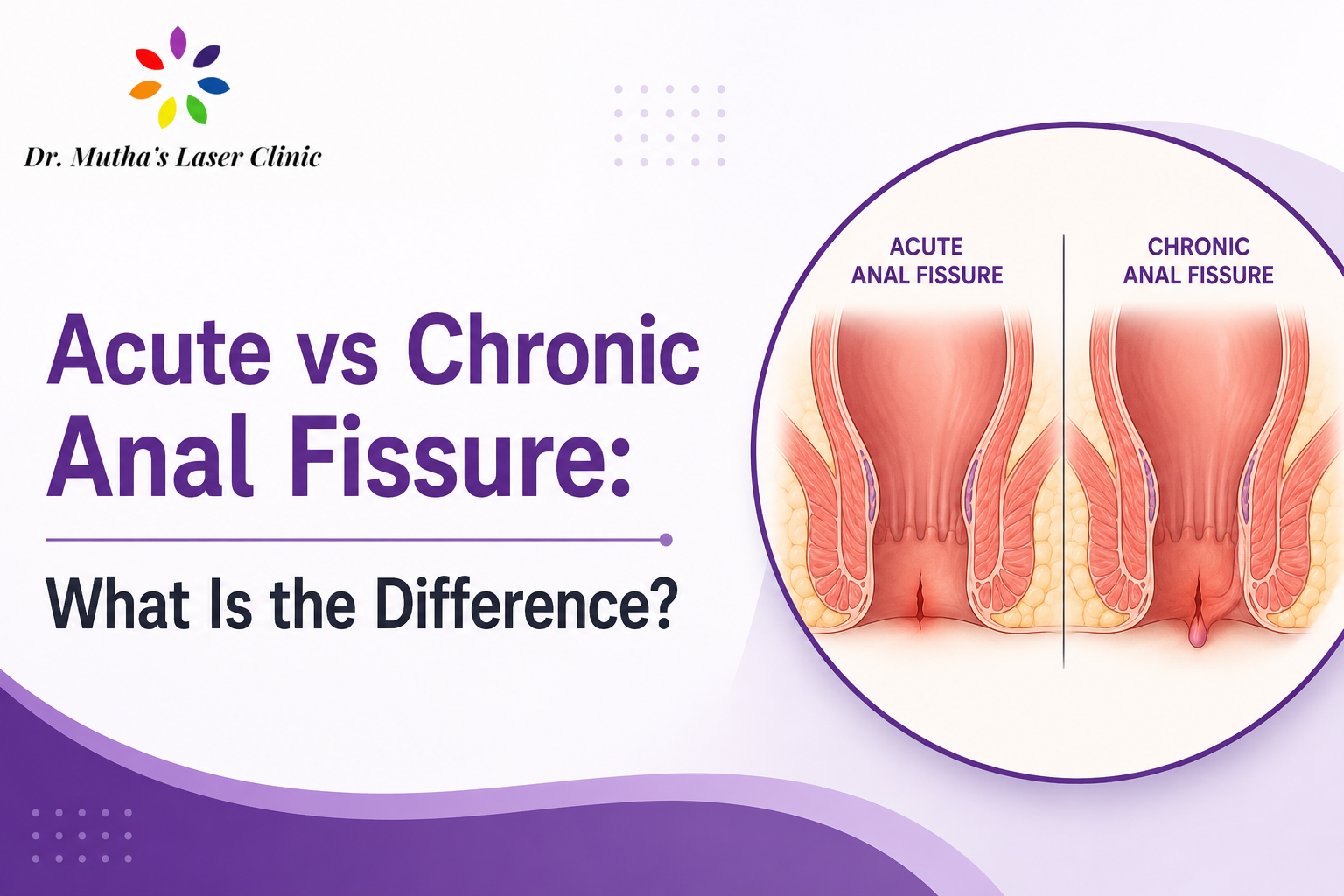
An anal fissure is a small tear in the lining of the anus that can cause pain, burning, or a small amount of bleeding, particularly during or after passing stool. While anal fissures can affect people of different ages, not every fissure behaves in the same way.
Based on how long the fissure has been present and how it looks clinically, it is generally described as either an acute anal fissure or a chronic anal fissure. Understanding the difference can help patients recognize when medical evaluation may be appropriate.
For individuals looking for expert evaluation, Dr. Neha Mutha, Pune provides consultation for conditions such as anal fissure, piles, and other anorectal concerns.
What Is an Acute Anal Fissure?
An acute anal fissure is usually a recent tear that has not been present for a long period. It may develop after passing a hard or large stool, repeated constipation, or episodes of diarrhea.
Common symptoms may include:
- Sharp pain while passing stool
- Burning or discomfort that may continue afterward
- A small amount of bright-red blood on toilet paper or the surface of the stool
- Discomfort around the anal opening
Many acute fissures may improve with appropriate conservative care, particularly when factors such as constipation and straining are addressed.
What Is a Chronic Anal Fissure?
A chronic anal fissure is a fissure that persists over time and may develop changes in the surrounding tissue. Persistent symptoms can sometimes occur when the original tear does not heal properly or when factors such as constipation and muscle spasm continue.
A chronic fissure may be associated with:
- Recurrent pain during bowel movements
- Repeated episodes of minor bleeding
- A visible skin tag near the fissure
- Thickened tissue around the affected area
- Symptoms that repeatedly improve and return
The exact appearance and duration used to describe a fissure as chronic can vary depending on clinical assessment. A healthcare professional can determine whether the fissure has features suggesting a longer-standing condition.
Acute vs Chronic Anal Fissure: Key Differences
| Feature | Acute Anal Fissure | Chronic Anal Fissure |
|---|---|---|
| Duration | Usually recent | Persists or repeatedly recurs |
| Tissue changes | Generally limited | May show changes from prolonged inflammation |
| Symptoms | Pain and bleeding may occur | Symptoms may be recurrent or persistent |
| Common contributing factors | Constipation, hard stool, diarrhea | Persistent constipation, repeated trauma or other contributing factors |
| Evaluation | May improve with conservative measures | May require further assessment if symptoms persist |
It is important to remember that symptoms alone cannot always distinguish between an acute and chronic fissure. A clinical examination may be needed for an accurate assessment.
What Causes an Anal Fissure?
Anal fissures can occur for several reasons. Common contributing factors include:
- Passing hard or large stools
- Constipation and straining
- Frequent diarrhea
- Reduced bowel regularity
- Trauma or irritation to the anal canal
Some fissures can also occur in association with other medical conditions. Therefore, recurrent or unusual symptoms should not simply be assumed to be caused by constipation.
How Is an Anal Fissure Diagnosed?
Diagnosis usually begins with a discussion about symptoms, bowel habits, pain, bleeding, and how long the problem has been present. Depending on the symptoms, a healthcare professional may perform an examination of the area.
If there is significant pain, recurrent bleeding, or uncertainty about the diagnosis, further evaluation may be recommended.
Getting the correct diagnosis is important because symptoms such as anal pain and rectal bleeding can have several possible causes.
How Are Acute and Chronic Anal Fissures Managed?
Management depends on the severity, duration, symptoms, and individual circumstances.
For some patients, initial management may focus on:
- Keeping stools soft
- Maintaining adequate fluid intake
- Eating enough dietary fibre
- Avoiding excessive straining during bowel movements
- Following medical advice regarding bowel habits and prescribed treatment
If symptoms do not improve or the fissure is recurrent or chronic, a doctor may discuss additional treatment options. The appropriate approach depends on the individual patient’s condition and examination findings.
When Should You See a Doctor?
It is advisable to seek medical evaluation if anal pain or bleeding:
- Continues or keeps returning
- Becomes severe
- Interferes with normal daily activities
- Occurs repeatedly during bowel movements
- Does not improve with appropriate self-care
Rectal bleeding should not automatically be attributed to an anal fissure. A medical evaluation can help identify the actual cause and determine suitable treatment.
Acute vs Chronic Anal Fissure: The Main Takeaway
The main difference between an acute and chronic anal fissure is the duration and clinical characteristics of the condition. An acute fissure is generally a recent tear, while a chronic fissure is persistent or recurrent and may show changes in the surrounding tissue.
If you are experiencing persistent anal pain, bleeding, or discomfort, timely consultation can help determine whether you have an acute fissure, chronic fissure, or another anorectal condition.
For patients searching for an Anal Fissure Specialist in Pune, Dr. Neha Mutha, Pune offers consultation and evaluation for anal fissure and related anorectal conditions.
Frequently Asked Questions
1. Is an acute anal fissure different from a chronic anal fissure?
Yes. An acute fissure is generally a recent tear, while a chronic fissure persists or repeatedly recurs and may develop characteristic tissue changes.
2. Can an acute anal fissure become chronic?
A fissure that does not heal or continues to be aggravated may persist and develop features of a chronic fissure. Medical assessment can help determine the appropriate management.
3. Does every anal fissure require surgery?
No. Treatment depends on the individual condition. Many fissures can initially be managed with conservative and medical approaches. Persistent cases may require additional treatment.
4. Is bleeding from an anal fissure always harmless?
No. Although a fissure can cause bright-red bleeding, rectal bleeding can have other causes. Recurrent or unexplained bleeding should be evaluated by a healthcare professional.
5. Which doctor should I consult for an anal fissure in Pune?
A qualified specialist can evaluate anal fissure symptoms and recommend appropriate treatment. Patients in Pune can consult Dr. Neha Mutha for evaluation of anal fissure and related anorectal conditions.
Medical Disclaimer: This article is for general educational purposes only and should not replace a consultation, diagnosis, or treatment plan from a qualified healthcare professional.