Pain, bleeding, itching, or discomfort during bowel movements can be worrying. Two common conditions that may cause some of these symptoms are Piles and Anal Fissure. Although people sometimes use these terms interchangeably, they are different conditions and may require different approaches to evaluation and treatment.
Understanding the possible differences can help you discuss your symptoms more clearly with a qualified healthcare professional. If you are experiencing persistent anal pain, bleeding, or changes in bowel habits, it is important to seek appropriate medical advice.
At Dr. Neha Mutha, patients can receive professional consultation for concerns related to Piles, Anal Fissure, Fistula, and other anorectal conditions.
What Are Piles?
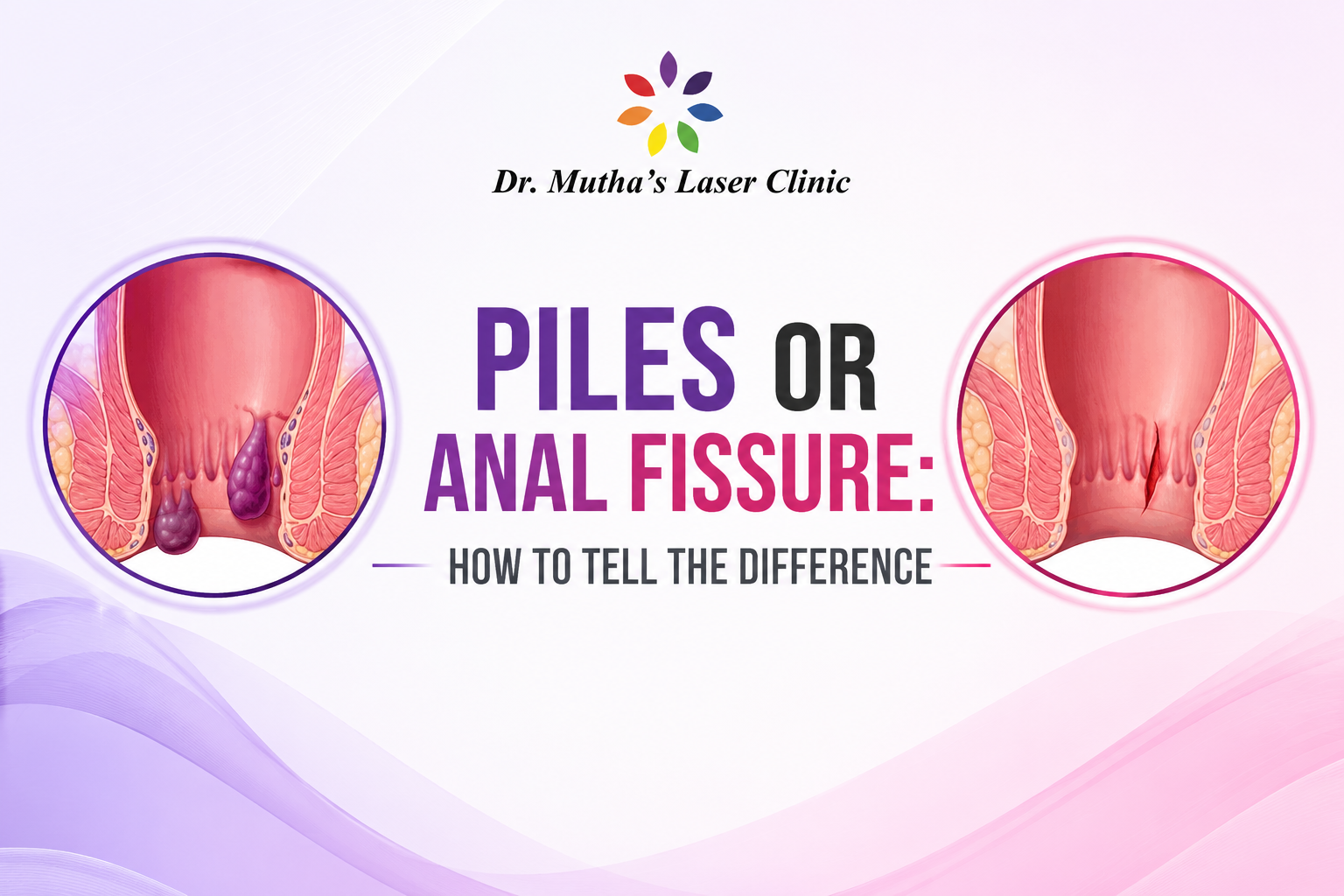
Piles, also known as haemorrhoids, are swollen blood vessels in or around the rectum and anus. They may develop due to increased pressure in the area. Factors such as chronic constipation, straining during bowel movements, prolonged sitting, and other individual factors may contribute to their development.
Piles can be internal or external. Symptoms can vary from person to person and may include:
- Bright red bleeding during or after a bowel movement
- Itching or irritation around the anal area
- A feeling of swelling or a lump
- Discomfort while sitting
- Mucus discharge in some cases
Not everyone with piles experiences the same symptoms. Some people may have minimal discomfort, while others may notice symptoms that require medical evaluation.
What Is an Anal Fissure?
An Anal Fissure is a Piles or Anal Fissure: How to Tell the Differencesmall tear or crack in the lining of the anus. It is commonly associated with the passage of hard stools or constipation, although other factors may also be involved.
One of the commonly reported symptoms is sharp pain during a bowel movement. The pain may continue for some time afterwards. Other possible symptoms include:
- Sharp or burning pain during passing stools
- Pain that continues after a bowel movement
- A small amount of bright red blood on toilet paper or the stool surface
- Tightness or discomfort around the anal opening
Because both Piles and an Anal Fissure may cause bleeding, it can be difficult to identify the condition based on symptoms alone.
Piles vs Anal Fissure: Key Differences
The following general comparison may help you understand why these conditions can feel different:
1. Type of Pain
With Piles, pain can vary depending on the type and severity of the condition. Some internal piles may cause bleeding without significant pain.
An Anal Fissure, on the other hand, is often associated with sharp or intense pain during bowel movements, sometimes followed by discomfort that lasts afterwards.
2. Bleeding Pattern
Both conditions can cause bright red bleeding. However, bleeding should never automatically be assumed to be caused by piles or a fissure. A medical professional can assess the cause, especially if bleeding is recurrent or unexplained.
3. Visible Swelling
External Piles may sometimes be associated with swelling or a lump around the anus. An anal fissure is a tear in the lining and may not cause a noticeable lump.
4. Main Sensation
People with Piles may report itching, irritation, swelling, or a feeling of fullness.
People with an Anal Fissure more commonly describe cutting, tearing, burning, or severe pain during bowel movements.
These differences are only general observations and should not be used for self-diagnosis.
Why Proper Diagnosis Is Important
Many anorectal conditions can have similar symptoms. For example, bleeding, pain, or discomfort may occur for different reasons. This is why it is important not to self-diagnose based only on information found online.
A qualified doctor may recommend an appropriate evaluation based on your symptoms, medical history, and clinical examination. Early consultation can help identify the cause of symptoms and guide suitable management.
If you are looking for professional consultation for symptoms related to Piles or Anal Fissure, Dr. Neha Mutha can provide appropriate medical guidance based on an individual assessment.
Can Piles and Anal Fissure Be Prevented?
While it may not always be possible to prevent every condition, healthy bowel habits may support digestive and anorectal health. Depending on individual needs and medical advice, general measures may include:
- Eating a balanced diet with adequate fibre
- Drinking sufficient fluids
- Avoiding unnecessary straining during bowel movements
- Responding to the natural urge to pass stool
- Staying physically active as appropriate
- Seeking medical advice for ongoing constipation or other bowel concerns
These measures are general health suggestions and may not be suitable as treatment for every person.
When Should You Consult a Doctor?
Consider seeking medical advice if you experience persistent or recurring symptoms such as:
- Rectal or anal bleeding
- Severe or recurring pain during bowel movements
- A persistent lump or swelling
- Ongoing itching or discomfort
- Significant changes in bowel habits
- Symptoms that do not improve or keep returning
Prompt evaluation is especially important when bleeding is recurrent, heavy, or accompanied by other concerning symptoms.
Get the Right Evaluation for Your Symptoms
Piles and Anal Fissure can share certain symptoms, but they are different conditions. Pain, bleeding, itching, or swelling should be properly evaluated rather than assuming the cause.
A professional consultation can help determine the possible reason for your symptoms and discuss appropriate next steps. Dr. Neha Mutha provides consultation for patients with concerns related to Piles, Anal Fissure, and other anorectal conditions.
Avoid self-treatment based solely on online information. For persistent symptoms, consult a qualified healthcare professional for personalised medical advice.
Medical Disclaimer: This article is for general informational purposes only and does not replace professional medical advice, diagnosis, or treatment. Please consult a qualified healthcare professional for personalised advice.
Frequently Asked Questions
1. How can I tell if I have Piles or an Anal Fissure?
Piles may cause bleeding, itching, swelling, or discomfort, while an Anal Fissure often causes sharp pain during or after passing stool. However, proper diagnosis requires medical evaluation.
2. Can Piles and Anal Fissure cause bleeding?
Yes, both conditions may cause bright red bleeding. Since rectal bleeding can have different causes, it is important to consult a qualified healthcare professional.
3. Can Piles turn into an Anal Fissure?
No. Piles and Anal Fissure are different conditions, although some factors, such as constipation and straining, may be associated with both.
4. When should I consult a doctor for anal pain or bleeding?
Seek medical advice if you have persistent pain, recurring bleeding, swelling, or symptoms that do not improve.
5. Who can I consult for Piles or Anal Fissure in Pune?
For symptoms related to Piles or Anal Fissure, you can consult a qualified specialist such as Dr. Neha Mutha for appropriate evaluation and guidance.