Piles can be frustrating, especially when symptoms return after medicines, creams, or even a previous procedure. You may experience relief for a few weeks or months, only to notice bleeding, itching, pain, or swelling again.
The reason is often simple: piles treatment may reduce the swollen piles, but the underlying pressure and bowel habits responsible for them may remain unchanged. According to the American Society of Colon and Rectal Surgeons, constipation, straining, diarrhoea, pregnancy, and irregular bowel habits can increase pressure in the anal region and contribute to symptomatic piles.
Understanding why piles keep returning is essential for finding a lasting solution. A consultation with Dr. Neha Mutha, can help identify the cause and determine the appropriate treatment based on the type and severity of the condition.
What Are Piles?
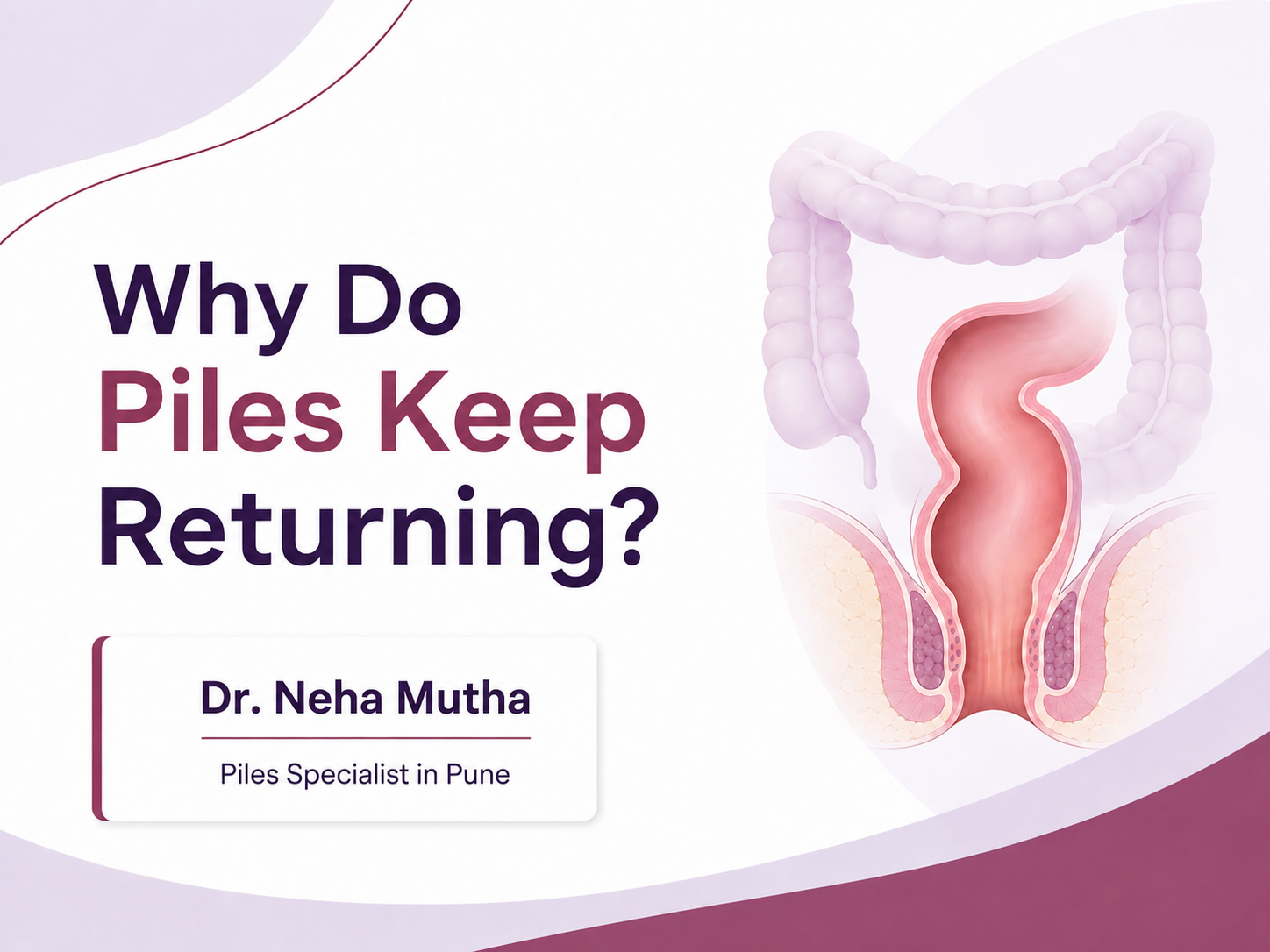
Piles, medically known as haemorrhoids, are swollen blood vessels and supporting tissues inside or around the anus. They are broadly divided into two types:
- Internal piles develop inside the rectum. They may cause painless bleeding or come outside the anus during a bowel movement.
- External piles develop beneath the skin surrounding the anus. They may cause pain, itching, swelling, or a tender lump.
Some people experience only mild symptoms, while others develop repeated bleeding, prolapse, discomfort, or difficulty sitting.
Why Do Piles Keep Returning?
Piles commonly return when the factors responsible for increased pressure in the anal blood vessels are not adequately controlled.
1. Chronic Constipation
Constipation is one of the most common reasons for recurring piles. Hard and dry stools require greater effort to pass. Repeated straining increases pressure on the blood vessels and tissues around the anus.
Even after piles have been treated, continuing constipation can cause the remaining haemorrhoidal tissue to swell again. Addressing constipation is therefore an important part of long-term piles management.
2. Straining During Bowel Movements
Some people strain even when they are not constipated. This may happen because of incomplete bowel emptying, poor toilet habits, or spending too much time trying to pass stool.
Straining forces blood into the veins of the anal region. When this continues regularly, the tissues supporting these blood vessels may weaken, increasing the possibility of bleeding and prolapse.
3. Sitting on the Toilet for Too Long
Using a mobile phone, reading, or working while sitting on the toilet can unintentionally increase toilet time. This position places continuous downward pressure on the anal blood vessels.
The National Institute of Diabetes and Digestive and Kidney Diseases identifies prolonged toilet sitting as a factor associated with piles. The toilet should be used only for passing stool, not as a place to sit for extended periods.
4. A Low-Fibre Diet
A diet lacking fruits, vegetables, whole grains, and other fibre-rich foods can make stools harder and more difficult to pass.
Medicines or procedures may provide temporary relief, but piles can return if the diet continues to cause constipation. Fibre helps add bulk to the stool while making it easier to pass without excessive pressure.
Fibre intake should be increased gradually because a sudden increase can cause gas and bloating in some people.
5. Inadequate Water Intake
Fibre cannot work effectively without sufficient fluids. Dehydration can make stools dry and hard, leading to straining and repeated irritation of piles.
Water requirements can vary depending on a person’s health, activity level, diet, weather, and medical conditions. People with kidney, liver, or heart conditions should ask their doctor about the appropriate fluid intake.
6. Frequent Diarrhoea
Piles are not caused only by constipation. Repeated loose stools can also irritate the anal area and increase pressure during frequent bowel movements.
Chronic diarrhoea should not be ignored. Identifying and treating its cause may help reduce repeated piles symptoms.
7. Heavy Lifting
Frequently lifting heavy weights, especially while holding the breath or using an incorrect technique, can increase pressure inside the abdomen. This pressure can then affect the blood vessels around the anus.
People involved in weight training or physically demanding work should use correct lifting techniques and avoid breath-holding during exertion.
8. Pregnancy and Childbirth
Pregnancy increases pressure in the abdomen and pelvis. Hormonal changes may also cause constipation, while straining during childbirth can further affect haemorrhoidal tissues.
Although pregnancy-related piles may improve after delivery, symptoms can continue or return when constipation and straining remain untreated.
9. Excess Body Weight and Limited Physical Activity
Excess body weight may place additional pressure on the pelvic and rectal veins. A sedentary lifestyle can also slow bowel movement and contribute to constipation.
Regular physical activity, appropriate for your health condition, can support digestive health and help maintain healthy bowel habits.
10. Relying Only on Creams or Home Remedies
Piles creams, suppositories, warm baths, and home remedies may reduce pain, itching, or swelling temporarily. However, they may not correct prolapse, treat advanced piles, or remove the underlying cause.
Symptoms that improve temporarily and repeatedly return require proper examination. Self-treatment without a diagnosis may also delay the detection of another condition.
Could It Be Something Other Than Piles?
Rectal bleeding should not automatically be assumed to be caused by piles. Anal fissures, fistulas, infections, inflammatory bowel conditions, polyps, and colorectal disorders may produce similar symptoms.
Consult a doctor if you experience:
- Repeated or heavy rectal bleeding
- Severe anal pain or swelling
- Blood mixed with stool
- Black or unusually dark stools
- Unexplained weight loss
- A persistent change in bowel habits
- Weakness, dizziness, or symptoms of anaemia
- Fever, pus, or increasing redness around the anus
A clinical examination helps confirm whether the symptoms are caused by piles and rules out other possible conditions.
Does Piles Treatment Guarantee They Will Never Return?
No treatment can guarantee that piles will never return. The possibility of recurrence depends on several factors, including:
- Grade and type of piles
- Treatment selected
- Severity of prolapse
- Bowel habits
- Diet and hydration
- Constipation or diarrhoea
- Adherence to post-treatment advice
The NHS notes that treatment does not always prevent piles from returning. However, selecting the appropriate treatment and correcting contributing habits can significantly improve long-term symptom control.
How Are Recurring Piles Treated?
Treatment is selected according to the grade of piles, symptoms, examination findings, and previous treatments.
Conservative Management
Mild piles may improve with:
- Fibre-rich foods
- Adequate fluid intake
- Stool-softening treatment when prescribed
- Avoiding straining
- Limiting toilet time
- Regular physical activity
- Treatment of constipation or diarrhoea
Office-Based Procedures
Internal piles causing repeated bleeding or prolapse may be treated with procedures such as rubber band ligation, sclerotherapy, or other techniques recommended after examination.
Surgical Treatment
Large, repeatedly prolapsing, thrombosed, or advanced piles may require surgery. The appropriate procedure depends on the individual condition. Not every patient needs surgery, and the decision should be made only after a proper assessment.
How Can You Reduce the Risk of Piles Returning?
Long-term prevention requires consistent bowel and lifestyle habits:
- Include fibre-rich foods in your daily meals.
- Drink sufficient fluids as advised for your health.
- Do not delay the urge to pass stool.
- Avoid forceful straining.
- Keep toilet visits brief.
- Exercise regularly.
- Avoid self-medicating repeatedly for rectal bleeding.
- Follow the post-treatment instructions given by your doctor.
- Seek medical advice when symptoms return instead of waiting for them to worsen.
Consult Dr. Neha Mutha – Piles Specialist in Pune
Recurring piles often indicate that the underlying cause, grade, or treatment requirement needs to be reassessed. Repeatedly using creams or temporary remedies may reduce discomfort without providing lasting control.
Dr. Neha Mutha, a piles specialist in Pune, provides evaluation and personalised treatment for piles based on the patient’s symptoms, bowel habits, and severity of the condition. If you have repeated bleeding, pain, swelling, or a lump near the anus, schedule a consultation for an accurate diagnosis and an appropriate treatment plan.
This blog is intended for general educational purposes and should not replace individual medical advice.