Expert Advice by Dr. Neha Mutha – Piles Specialist in Pune
Constipation is one of the most common digestive problems today, affecting people of all age groups. Irregular bowel movements, hard stools, bloating, and excessive straining not only cause discomfort but can also lead to conditions like piles (hemorrhoids), fissures, and chronic rectal pain if ignored.
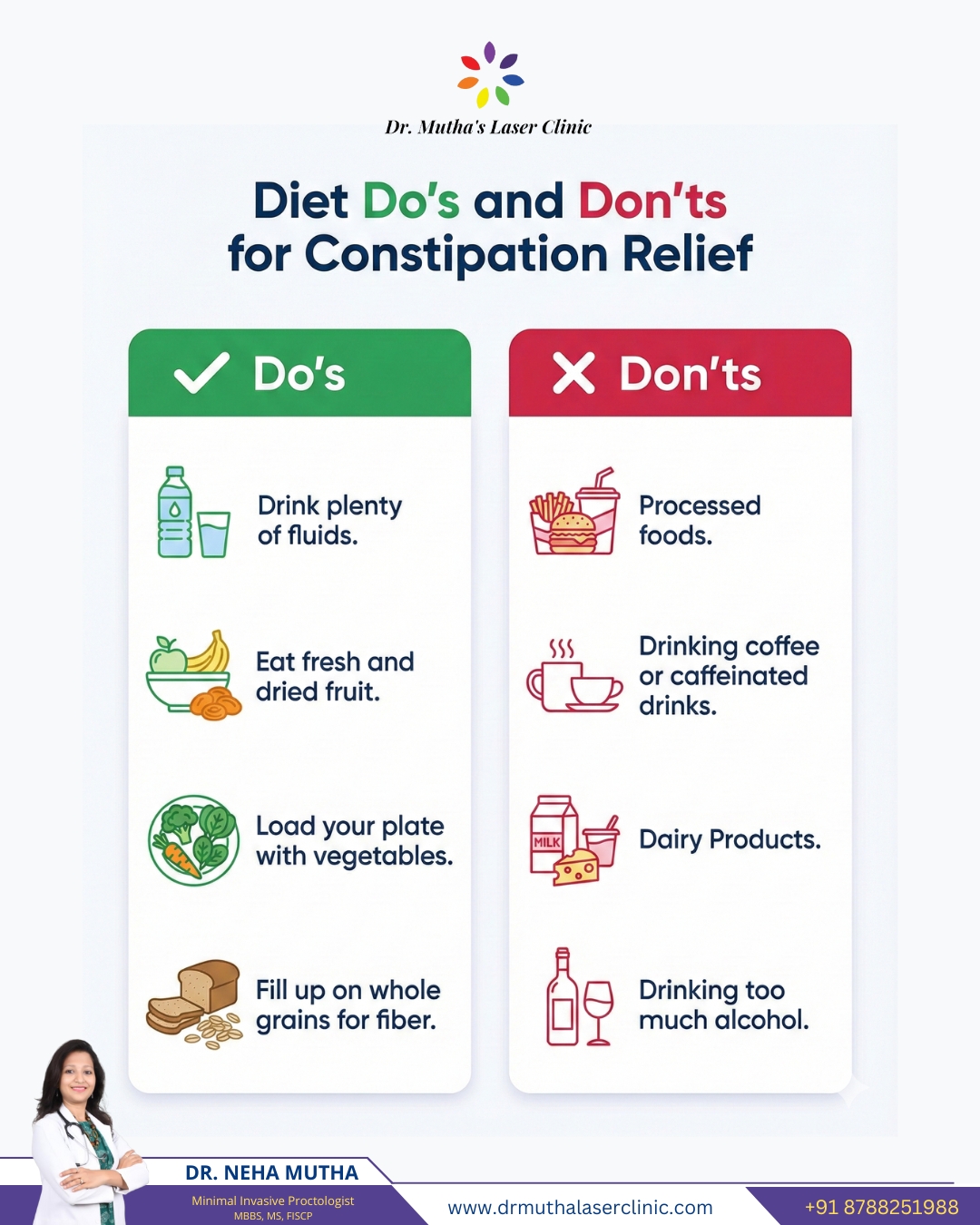
According to Dr. Neha Mutha, Piles Specialist in Pune, the right diet plays a crucial role in relieving constipation and preventing piles. Let’s understand what you should eat (Do’s) and what you should avoid (Don’ts) for long-term constipation relief.
✅ Diet Do’s for Constipation Relief
1. Increase Fiber Intake
Fiber adds bulk to stools and helps them pass easily through the intestines.
High-fiber foods include:
-
Whole grains (brown rice, oats, whole wheat roti)
-
Fruits like papaya, apple (with peel), pear, figs
-
Vegetables such as spinach, carrot, bottle gourd, beans
-
Pulses and legumes (dal, chickpeas, rajma)
👉 Aim for 25–30 grams of fiber daily.
2. Drink Plenty of Water
Dehydration is a major cause of constipation. Fiber works best only when combined with adequate fluids.
-
Drink 8–10 glasses of water daily
-
Warm water in the morning can stimulate bowel movement
-
Coconut water and buttermilk are also helpful
3. Include Probiotics
Probiotics improve gut health and promote regular bowel movements.
Good probiotic sources:
-
Curd (yogurt)
-
Buttermilk
-
Fermented foods
4. Eat on Time
Irregular eating habits disturb digestion.
-
Follow fixed meal timings
-
Eat slowly and chew food properly
-
Avoid skipping breakfast
5. Add Natural Laxative Foods
Certain foods naturally ease constipation:
-
Isabgol (psyllium husk) with warm water or milk
-
Soaked raisins or figs
-
Flaxseeds (alsi)
❌ Diet Don’ts for Constipation
1. Avoid Processed & Junk Foods
These foods are low in fiber and high in fat, making stools hard.
❌ Burgers, pizza, bakery items
❌ Packaged snacks and instant foods
2. Limit Refined Foods
Refined flour products slow down digestion.
-
Maida-based foods
-
White bread
-
Pastries and sweets
3. Cut Down on Excess Tea & Coffee
Too much caffeine can dehydrate the body and worsen constipation.
👉 Limit to 1–2 cups per day
4. Avoid Spicy and Fried Foods
These can irritate the digestive system and worsen piles symptoms.
-
Deep-fried snacks
-
Excess oil and masalas
5. Don’t Ignore the Urge to Pass Stool
Delaying bowel movements leads to harder stools and chronic constipation, increasing the risk of piles.
Constipation & Piles: The Strong Connection
Chronic constipation is one of the leading causes of piles. Continuous straining puts pressure on rectal veins, leading to swelling and pain.
Dr. Neha Mutha, an experienced Piles Specialist in Pune, emphasizes early lifestyle and dietary correction to avoid surgical intervention whenever possible.
When Should You See a Doctor?
Consult a specialist if you experience:
-
Constipation lasting more than 2 weeks
-
Bleeding during stools
-
Severe pain or itching around the anus
-
Recurrent piles despite dietary changes
Early consultation ensures effective piles treatment in Pune with minimal discomfort and faster recovery.
A fiber-rich diet, adequate hydration, and healthy lifestyle habits can significantly improve constipation and prevent piles. Small daily changes can make a big difference in your digestive health.
For personalized guidance and advanced piles care, consult Dr. Neha Mutha – Piles Specialist in Pune.
#ConstipationRelief #ConstipationDiet #PilesTreatmentInPune #PilesSpecialistInPune #DrNehaMutha #DigestiveHealth #GutHealth
#HemorrhoidsCare #HealthyBowel #PilesAwareness